Best Camera Under ₹90,000 in India: Fujifilm X-M5 vs Sony a6400

7 min read

Fujifilm X-M5 vs Sony a6400 best camera under 90000 India side by side

Short version: Both the Fujifilm X-M5 with its 15-45mm lens and the Sony a6400M with its 18-135mm lens are currently listed under ₹90,000 in India. The X-M5 is the better pick for video and Fujifilm colour. The Sony is the more flexible photography kit because its 18-135mm lens covers much more ground.

Price first: both complete kits fit the budget

The current retailer listings make this comparison more interesting than a simple body-only matchup. The Fujifilm X-M5 with the 15-45mm lens is listed at ₹88,000, while the Sony a6400M with the 18-135mm lens is listed at ₹87,490. These are sale prices checked on September 29, 2026, so they can change.

Camera kit Current listed price Official MRP Lens included
Fujifilm X-M5 ₹88,000 ₹94,999 15-45mm
Sony a6400M ₹87,490 ₹1,09,990 18-135mm

That last column matters. The X-M5 is bundled with a small everyday zoom. The Sony kit costs roughly the same today but includes a much longer lens, which changes what each camera can do on a trip or at an event.

Check the current listings: Buy the Fujifilm X-M5 with 15-45mm lens on Amazon India or buy the Sony a6400M with 18-135mm lens on Amazon India. Prices, sellers and stock can change.

We may earn a commission if you buy through our Amazon India links, at no extra cost to you.

Fujifilm X-M5 mirrorless camera with 15-45mm lens
Fujifilm X-M5 with the compact 15-45mm lens. Image: Fujifilm.

What APS-C means on the X-M5 and a6400

Both cameras use an APS-C sensor, roughly 23.5 × 15.6 mm. That is smaller than a full-frame (35mm) sensor at about 36 × 24 mm. The smaller chip is why these kits stay lighter and cheaper than full-frame bodies, while still delivering the detail and low-light performance most creators need under ₹90,000.

APS-C also changes how lenses behave. Fujifilm and Sony both treat APS-C as about a 1.5× crop versus full-frame. A 35mm lens on either body frames the scene more tightly, similar to a ~52mm lens on full-frame. That helps for portraits and vlogs; you need a wider lens if you want the same room-filling view a full-frame shooter gets from the same focal length.

APS-C vs full-frame sensor size comparison for Fujifilm X-M5 and Sony a6400
APS-C (about 23.5 × 15.6 mm) sits inside a full-frame (about 36 × 24 mm) outline. Both the X-M5 and a6400 are APS-C.

Depth of field is a little deeper on APS-C at the same aperture and framing, so creamy background blur takes a faster lens or more distance to the background. For travel, events, and everyday video, that extra sharpness across the frame is often a plus.

Neither camera is better because of sensor class. They compete on colour science, autofocus, video codecs, lens ecosystems, and the kit you get under ₹90,000. APS-C is simply the shared foundation.

APS-C 1.5x crop factor field of view versus full-frame same focal length
Same focal length, tighter frame on APS-C (about 1.5× crop).

What a telephoto kit lens actually does

A telephoto zoom reaches farther than a normal kit lens. On these APS-C bodies, the Sony a6400M’s 18–135mm covers wide scenes at 18mm and pulls in distant subjects toward 135mm (about a 27–200mm full-frame equivalent with the 1.5× crop). That range is useful for travel, events, and casual wildlife without swapping lenses.

The Fujifilm X-M5 kit’s 15–45mm stays wider and shorter. It is lighter and better for vlogs, street, and indoor rooms, but it will not fill the frame with a far-away subject the way 135mm can. If you buy the X-M5 and later need reach, you add a longer XF or XC zoom; with the a6400M kit, that reach is already in the box.

Telephoto also magnifies handshake. At the long end, use a faster shutter, brace yourself, or turn on the lens/body stabilisation you have. Zooming in does not add megapixels; it only crops the angle of view, so light and technique still matter.

Fujifilm X-M5: the better creator camera

The X-M5 is the newer and more video-focused option. It uses a 26.1-megapixel APS-C sensor, Fujifilm’s X-Processor 5 and subject detection autofocus. It can record 6.2K video at 30 frames per second, 4K at 60 frames per second and 10-bit footage internally.

That makes it a strong option for YouTube videos, travel clips, product videos and short-form content. It also has three built-in microphones, a vertical video mode and useful features such as Product Priority and Background Defocus.

The Film Simulation dial is another reason people look at Fujifilm. You can choose looks such as Classic Chrome, Velvia, Acros and Reala Ace while shooting, instead of editing every image later.

The 15-45mm lens is small and easy to carry. It is useful for street photography, family photos, travel scenes and everyday shooting. Its limitation is reach. It will not give you the same framing options as Sony’s 18-135mm lens.

The X-M5 does not have an electronic viewfinder, so you compose with the rear screen. That is fine for video and casual photography, but a viewfinder is more comfortable when the sun is bright.

Sony a6400M: the more flexible photography kit

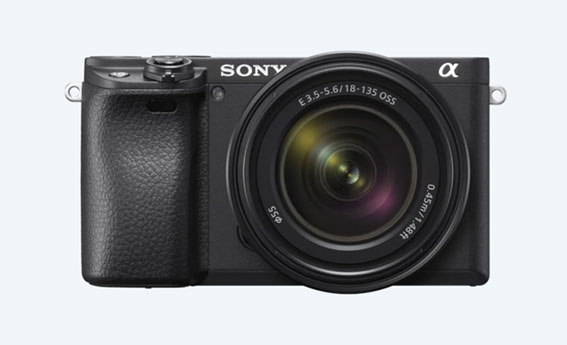
Sony a6400 mirrorless camera with 18-135mm zoom lens
Sony a6400M with the 18-135mm zoom lens. Image: Sony.

The Sony a6400 is older, but the 18-135mm kit is extremely practical. The lens covers wide-angle shooting, portraits and distant subjects without asking you to change lenses every few minutes.

That makes it the better travel kit on paper. You can photograph a landscape at 18mm, frame a person at a moderate focal length and zoom in to 135mm when a subject is farther away.

The a6400 also has an electronic viewfinder, fast autofocus and real-time subject tracking. If you mainly photograph people, pets, travel or events, it offers a more traditional camera experience than the screen-focused X-M5.

The compromise is video. The a6400 records 4K, but it does not offer the X-M5’s 6.2K, 10-bit and 4K 60p features. Its menu system and video controls also feel older.

Which lens is better?

The Sony 18-135mm lens is much more versatile. It gives you a wide range in one package and is the main reason the a6400M is such a strong deal at the current price.

The Fujifilm 15-45mm lens is more compact and keeps the whole camera easier to carry. It is the better match for someone who wants a small daily camera and plans to add a prime lens later.

This is not a perfect lens-to-lens comparison. The Sony kit offers more reach, while the Fujifilm kit prioritises portability.

Which camera is better for photos?

Both cameras use APS-C sensors, so either can produce sharp, detailed photos with good light and a suitable lens. The difference is more about the experience and the type of images you want.

The X-M5 gives you Fujifilm’s colour profiles and Film Simulations. If you like images that look finished straight from the camera, it is the more enjoyable option.

The Sony gives you a viewfinder, a longer lens and a practical autofocus system. It is the safer choice for someone buying a first interchangeable-lens camera and wanting to cover several types of photography immediately.

Which camera is better for video?

The Fujifilm X-M5 is the clear choice for video. Its 6.2K recording, 4K 60p, 10-bit footage, built-in microphone controls and vertical video options give it a newer creator-focused feature set.

The Sony a6400 can still produce good 4K video, but it makes more sense for someone who mainly takes photos and only occasionally records clips. If you plan to edit footage on Android, our Adobe Premiere Android guide covers the mobile editing side.

Who should buy the Fujifilm X-M5?

  • You want to shoot video regularly.
  • You like Fujifilm’s Film Simulations.
  • You want 4K 60p and 10-bit recording.
  • You prefer a smaller travel camera.
  • You are happy to add lenses over time.

Who should buy the Sony a6400M?

  • You mainly shoot photos.
  • You want an electronic viewfinder.
  • You photograph travel, people, pets or events.
  • You want one lens that covers most everyday situations.
  • You want access to Sony and third-party E-mount lenses.

My take

At the current sale prices, both kits are good options under ₹90,000.

The Fujifilm X-M5 is the more exciting camera body. It has better video features, stronger built-in audio controls and a more creative shooting experience.

The Sony a6400M is the better complete kit. Its 18-135mm lens gives you much more range than the Fujifilm 15-45mm lens, and the electronic viewfinder makes it more comfortable for photography.

Buy the X-M5 if video and colour are your priority. Buy the Sony a6400M if you want one camera and lens that can handle almost everything.

Where to buy

Check current Amazon India prices for these kits:

Buy Fujifilm X-M5 kit on Amazon

Buy Sony a6400 kit on Amazon

Share this story

About the author